


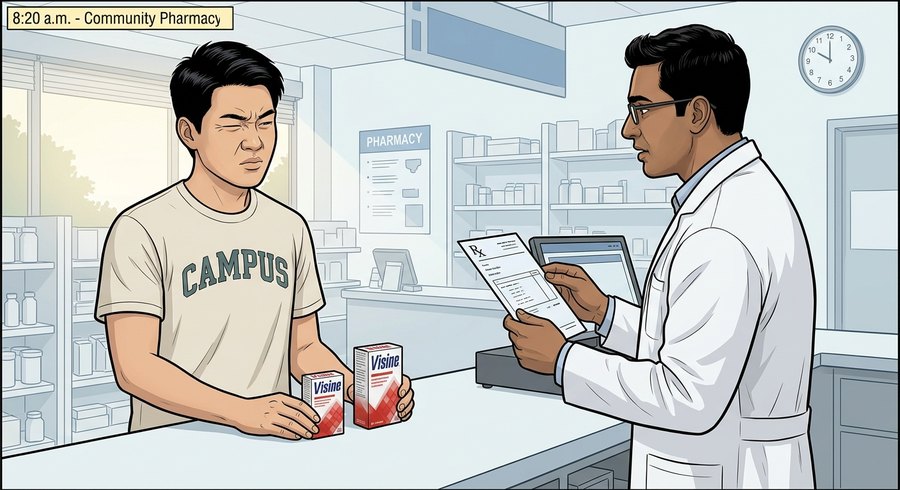
Raj stops the Visine sale and tells Jordan someone should look at that eye today.
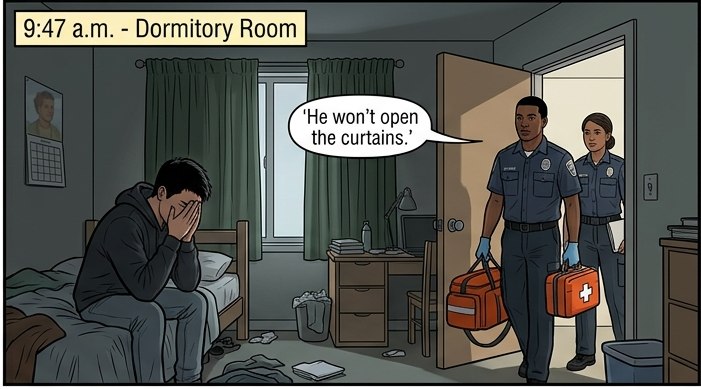
Marcus meets the campus EMS crew at the door: “He won’t open the curtains.”
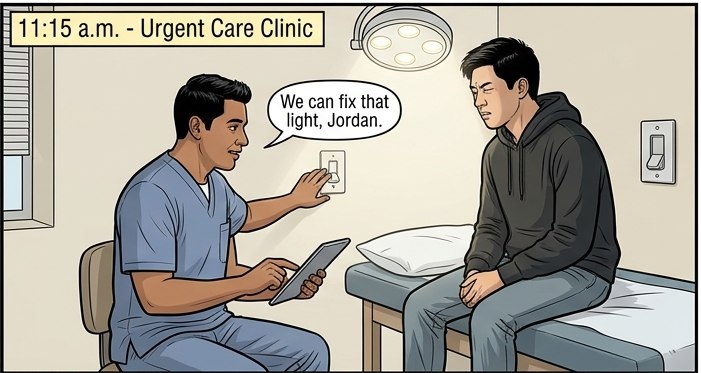
Diego rooms Jordan and, without being asked, reaches for the light switch: “We can fix that light, Jordan.”
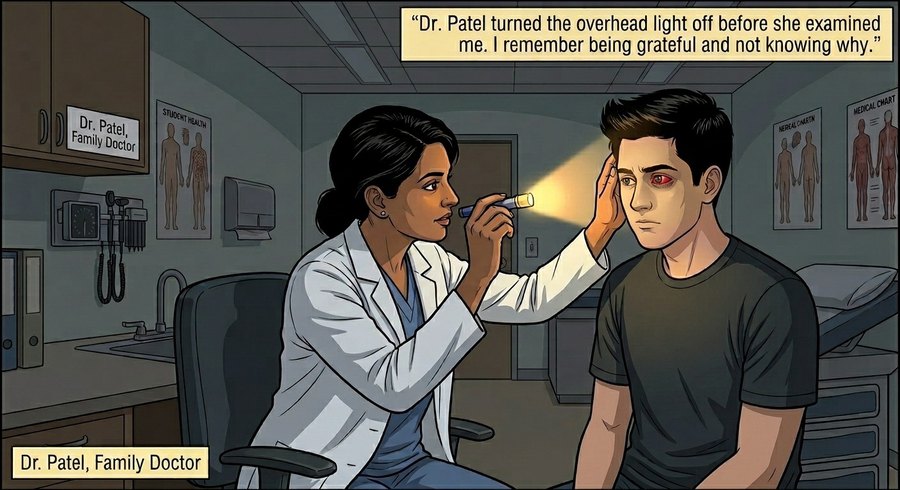
Dr. Patel starts with the question that opens the whole case: “Tell me about the redness. Is it more concentrated in one area?”
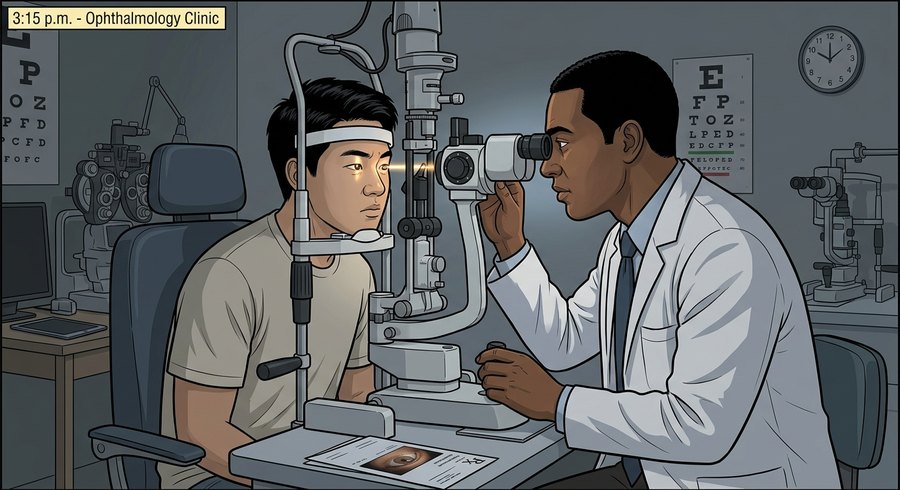
At the slit lamp, Dr. Osei finally sees what no one else could: inflammation inside the eye itself.
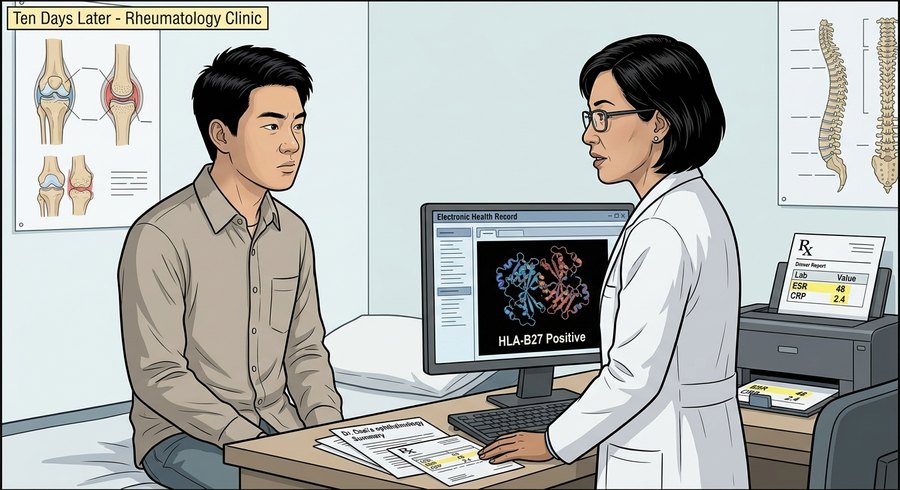
The HLA-B27 result is on the screen, Dr. Osei’s letter is on the desk, and Dr. Nakamura assembles the whole picture.
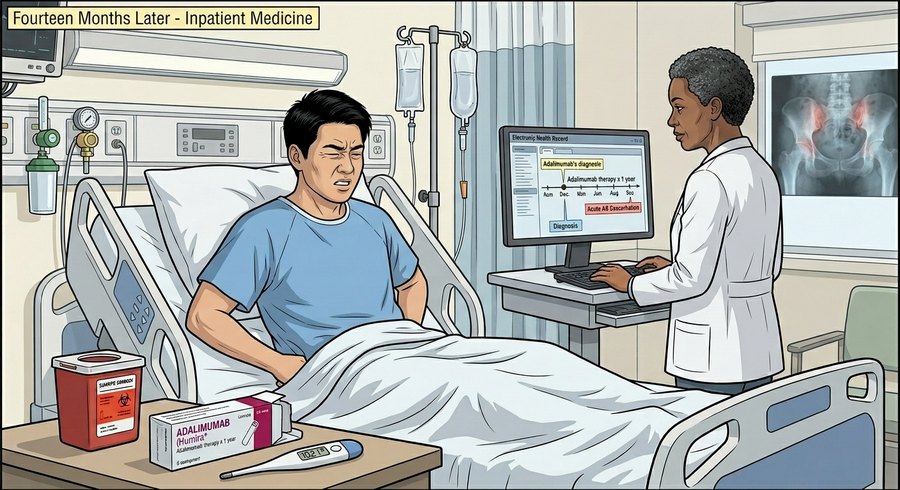
Jordan is admitted with a severe flare, and Dr. Kim works the timeline in the chart.
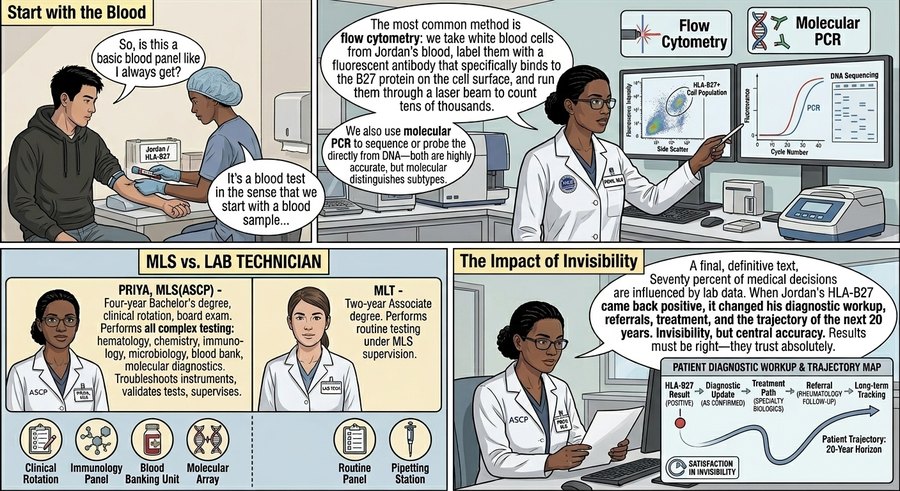
One tube of blood becomes the HLA-B27 result that reorganizes Jordan’s next twenty years, and Priya runs the machines, and the judgment, behind it.
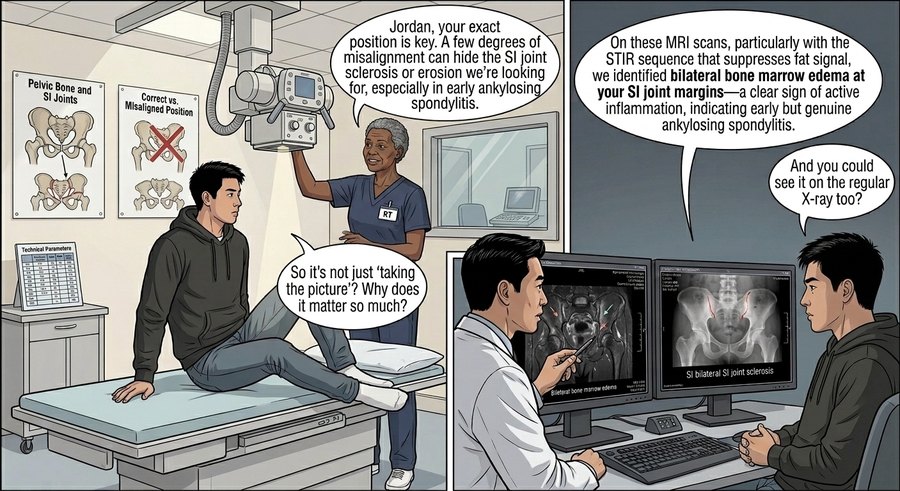
A few degrees of positioning decide whether early sacroiliitis shows at all: Keisha moves the machine, and the diagnosis moves with it.
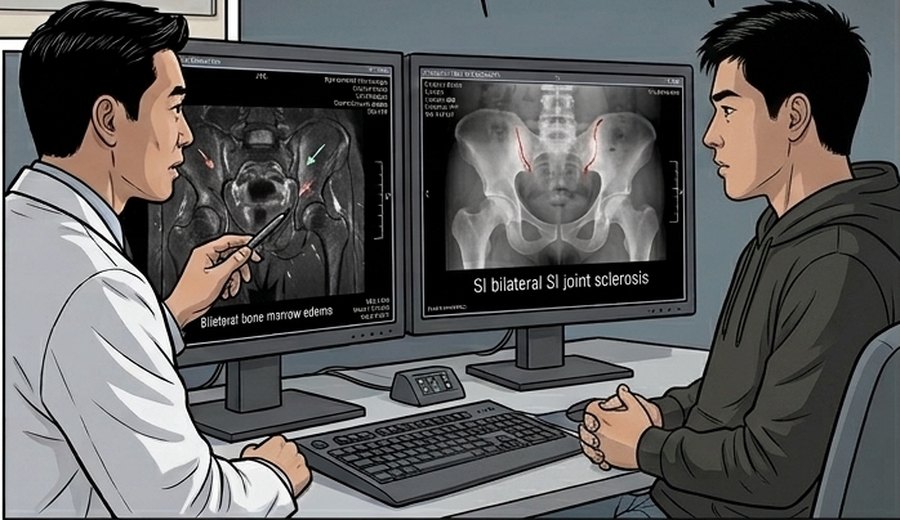
On the STIR sequence, Dr. Park finds bilateral bone marrow edema at the sacroiliac joints: active inflammation, visible on MRI before the X-ray could prove it.
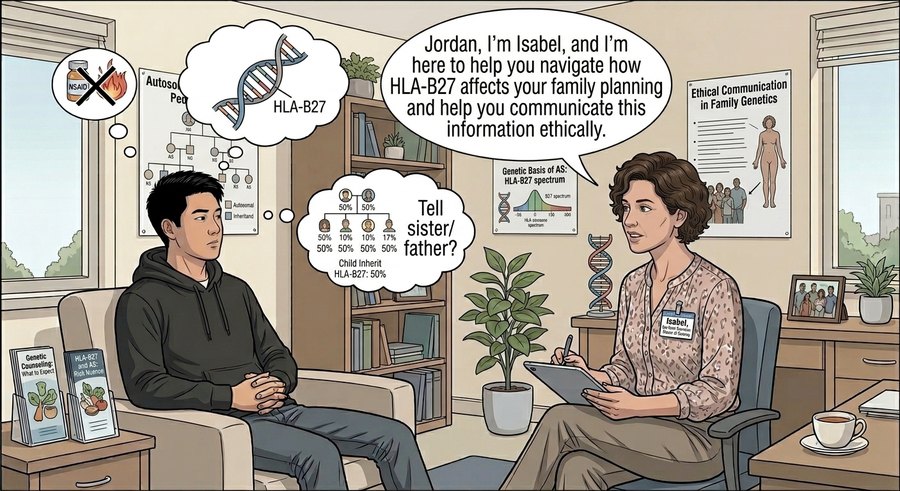
HLA-B27 runs in families, and Isabel helps Jordan think through what his result means for Anna, for his father, and someday for his own children.
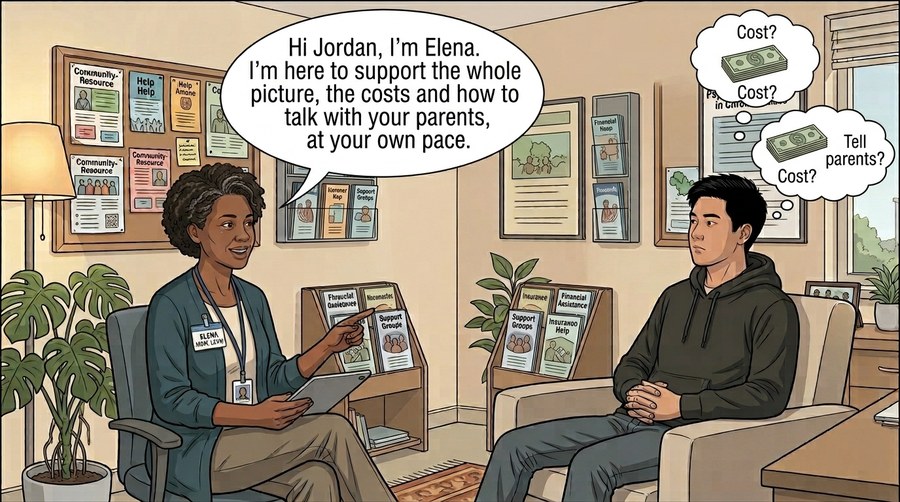
Elena’s opener names the two things nobody else has asked about: the costs, and how to tell his parents.
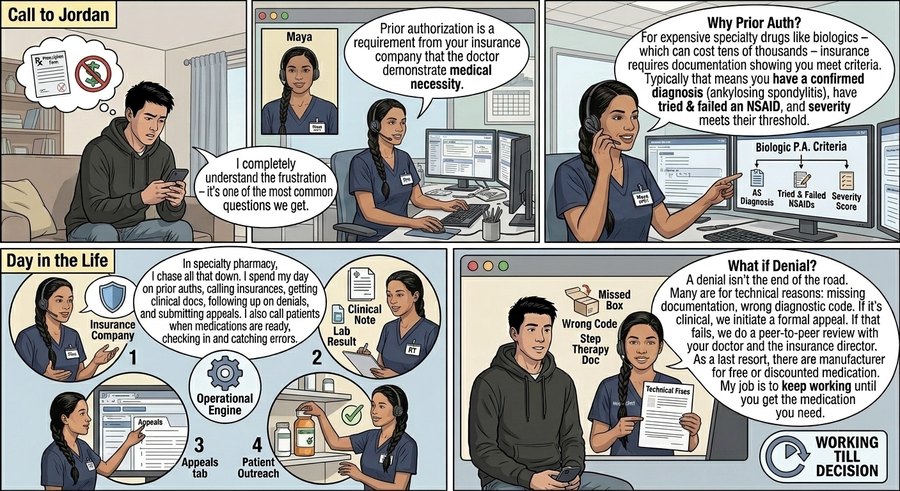
A prior authorization stands between Jordan and his biologic, and Maya works the phones, the criteria, and the appeals queue until it clears.
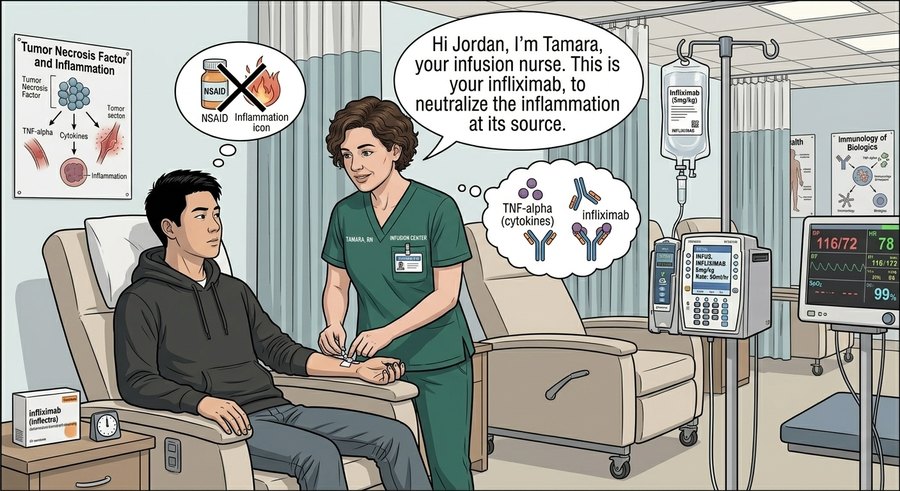
Two quiet hours in the chair, a biologic dripping in, and a nurse who notices everything.
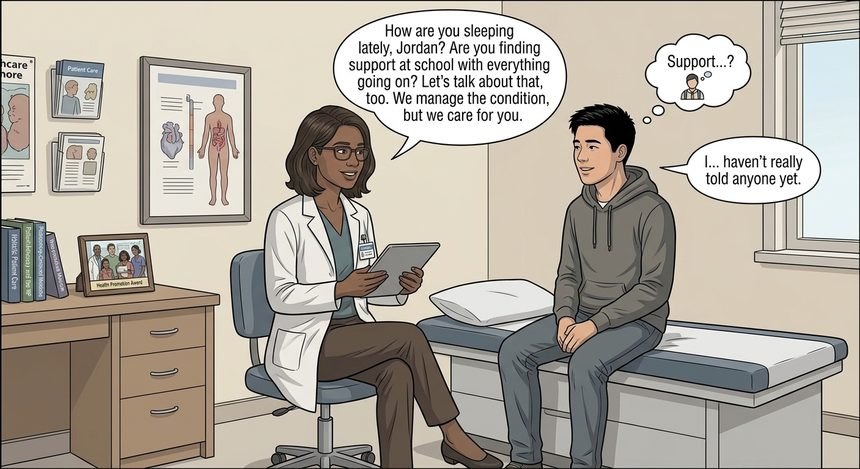
Jenna, the nurse practitioner, runs the routine monitoring visit and asks the quieter questions the checklist doesn't: how are you sleeping, how is school, who knows.
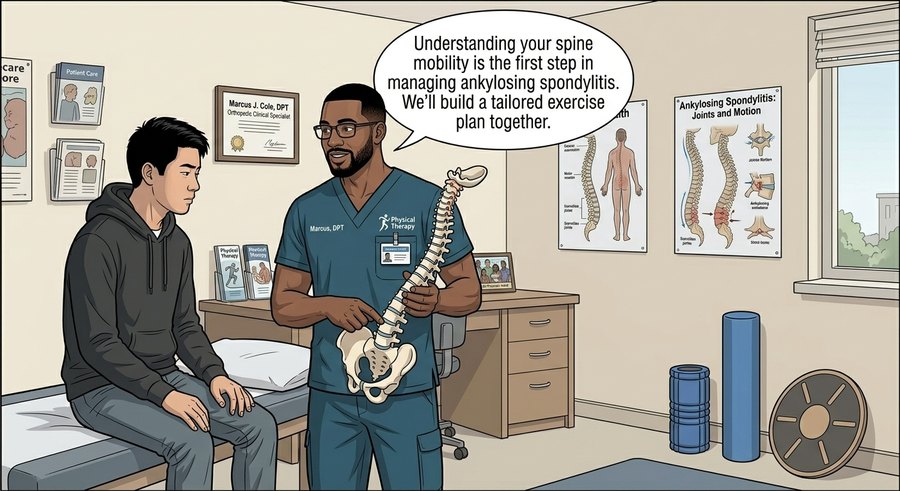
Spine mobility first, then a tailored exercise plan: among the most evidence-supported treatments for AS.
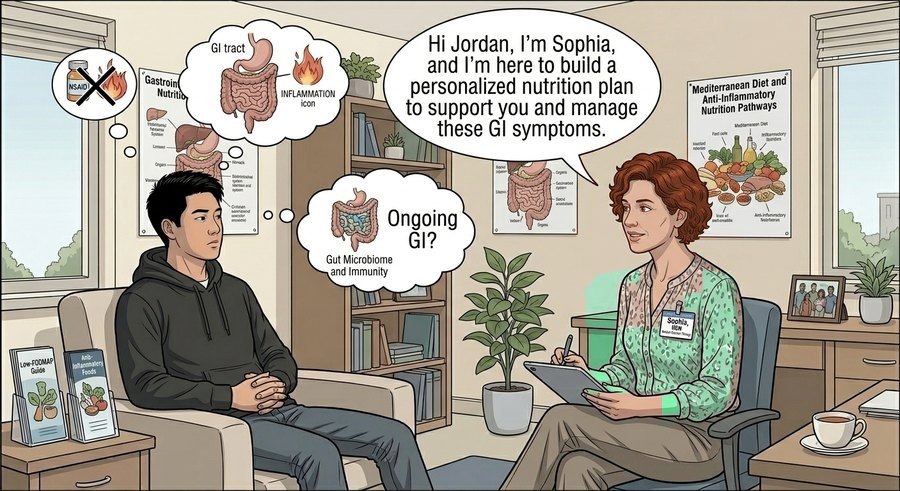
Sophia builds Jordan a plan for the GI symptoms that turn out to belong to the same disease story as his eye and his back.
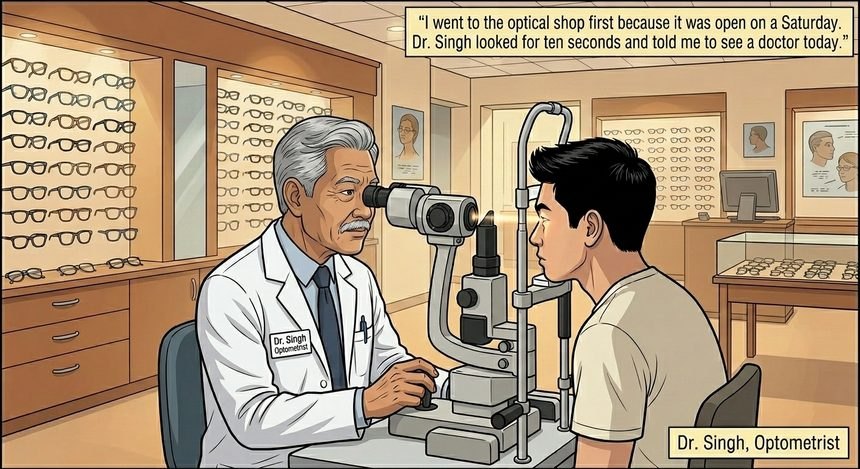
Dr. Singh, the optometrist, is open when nothing else is. Ten seconds at the slit lamp and he tells Jordan to see a doctor today.
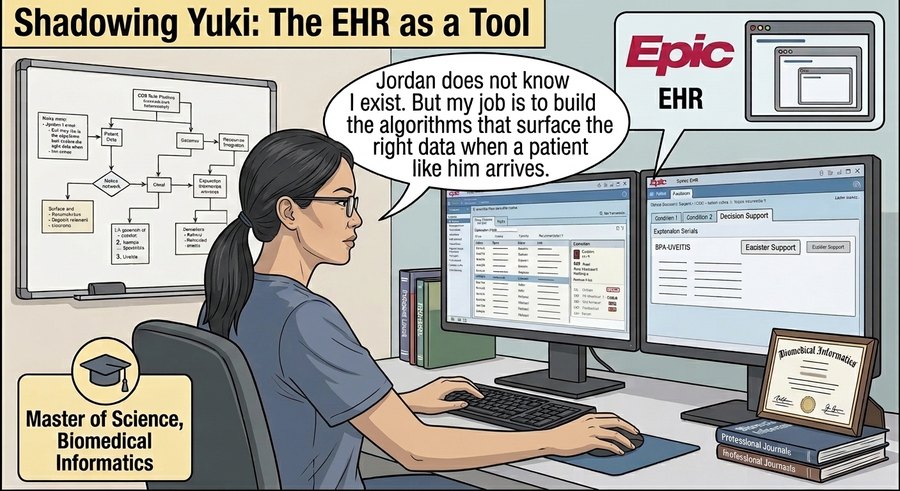
Jordan never meets the informatics specialist whose decision-support rules surface the right data the moment a patient like him arrives; this is what invisible care looks like.
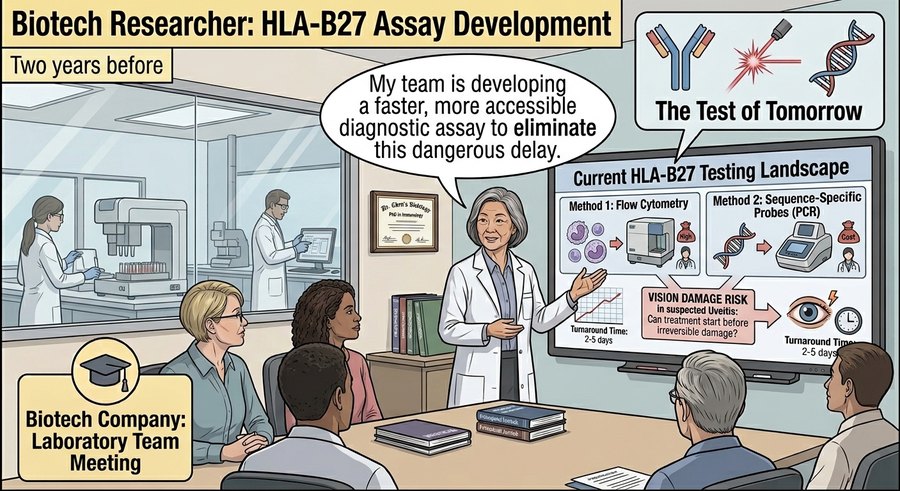
In a biotech conference room, Dr. Chen pitches a faster, more accessible HLA-B27 assay; the test that could someday answer in hours is being argued into existence while Jordan is still healthy.
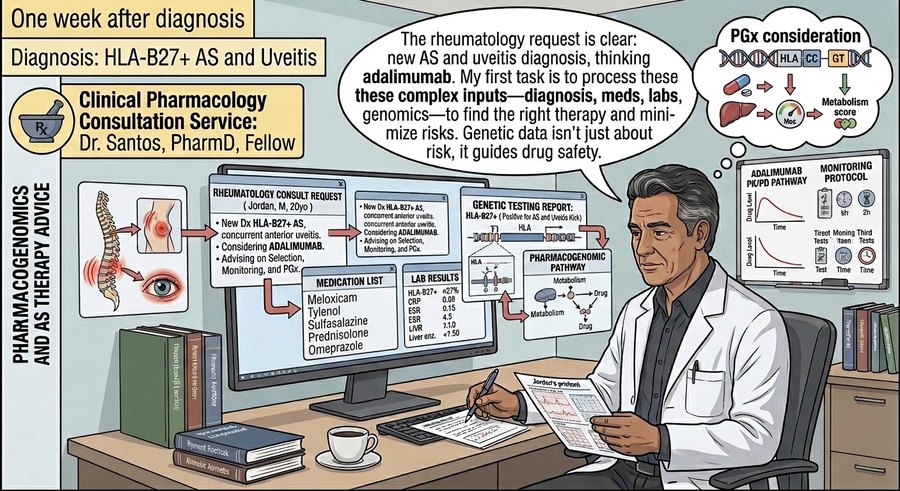
One week after diagnosis, Dr. Santos weighs the biologic against Jordan’s whole chart, diagnosis, medications, labs, and genomics, so the therapy fits the person and the risks are named before the first dose.
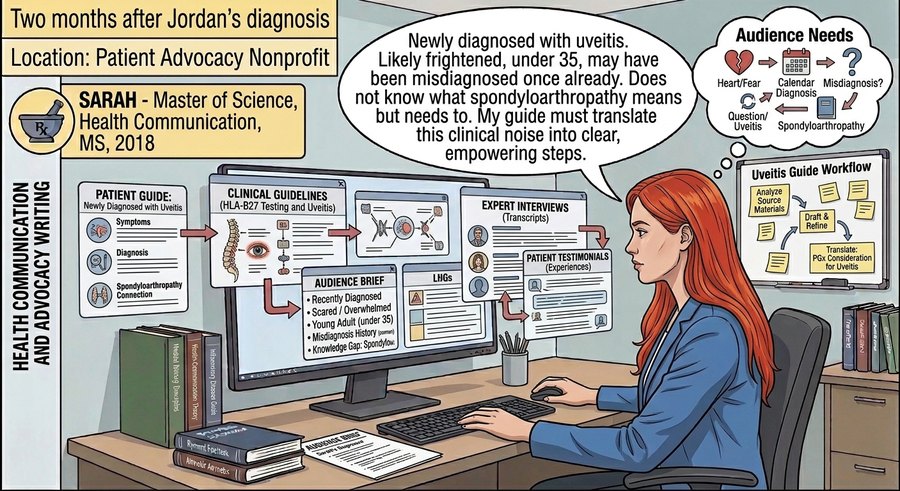
At a patient advocacy nonprofit, Sarah turns guidelines, interviews, and testimonials into the plain-language uveitis guide the next frightened twenty-year-old will find at 2 a.m.
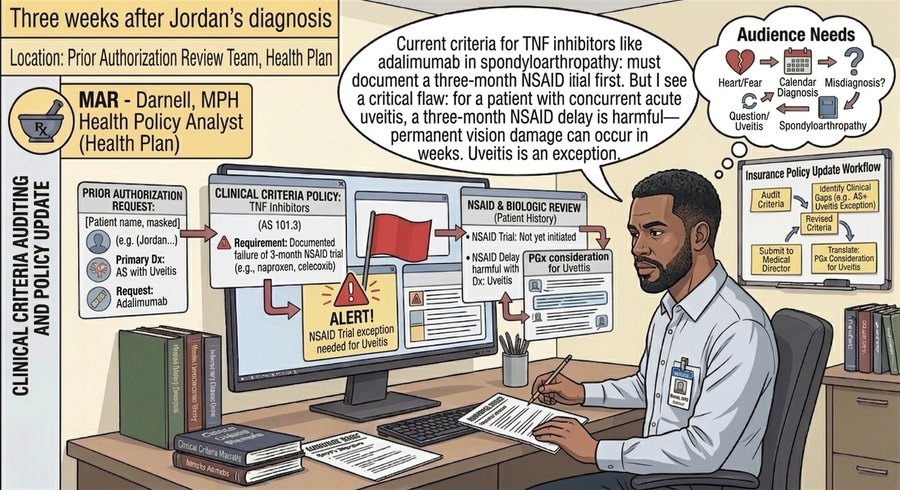
Auditing the prior-authorization rules, the policy analyst finds the flaw Jordan just lived, a three-month NSAID-trial requirement that acute uveitis cannot safely wait out, and drafts the exception.
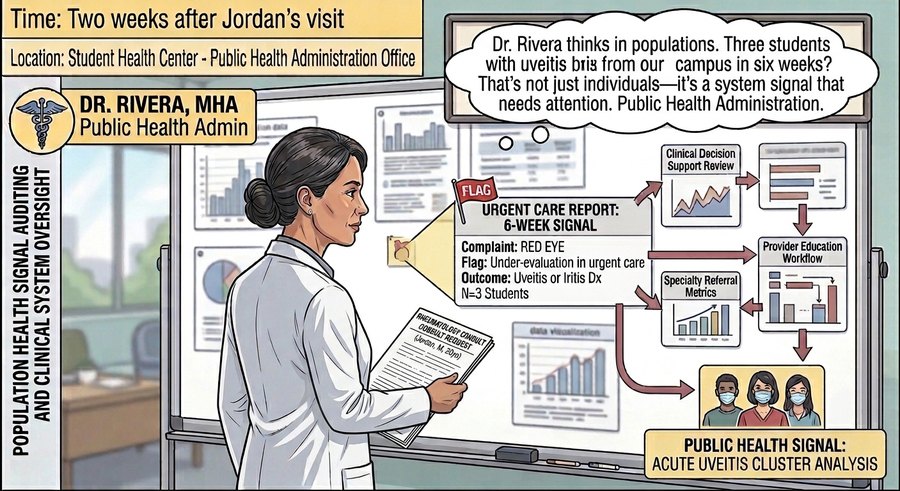
Dr. Rivera thinks in populations: three campus uveitis diagnoses in six weeks is a system signal, and her whiteboard turns Jordan’s case into clinician education and better referral pathways.
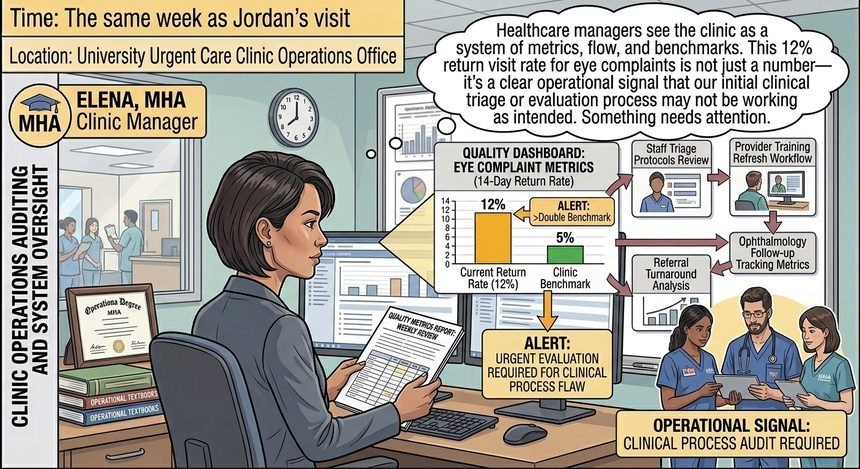
Denise, the healthcare manager, never meets Jordan, but the way she runs the clinic shapes every visit that happens inside it.
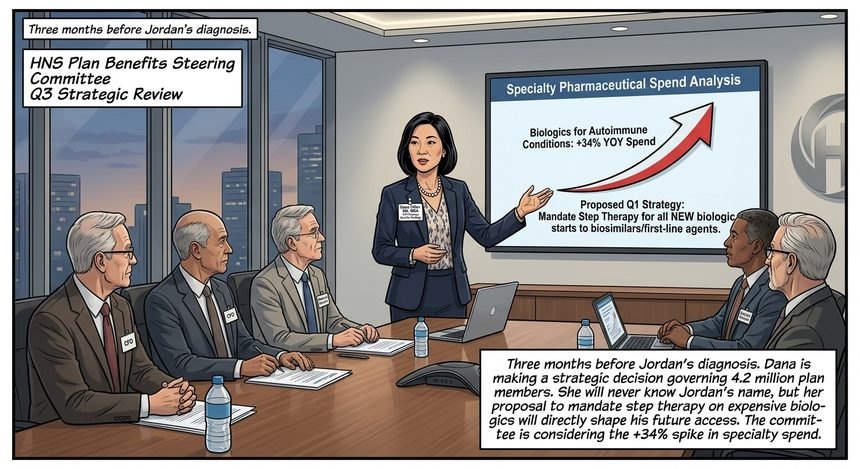
Dana, an insurance executive, weighs a coverage policy that will decide whether patients like Jordan get their biologic without weeks of delay.
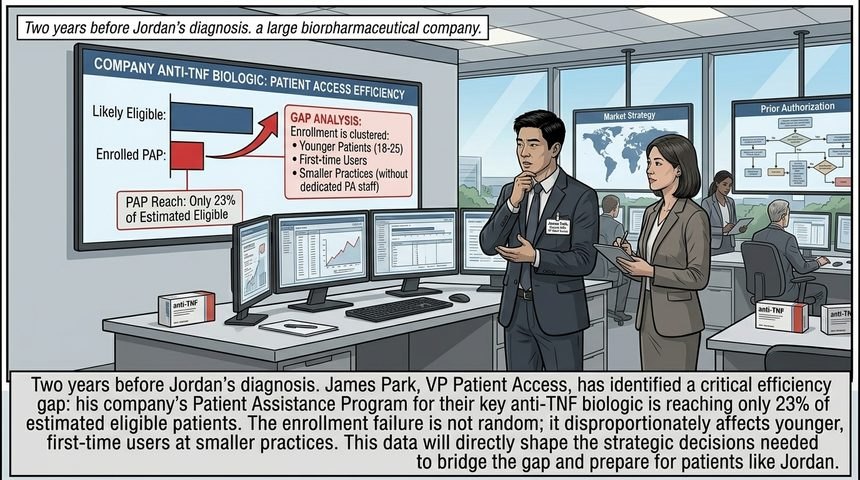
James Park, a biopharma executive, makes an access decision that ripples out to patients he will never meet, Jordan among them.