
What happened to Jordan
Read this once, straight through, before you meet anyone. Everything on the map below grows out of it.
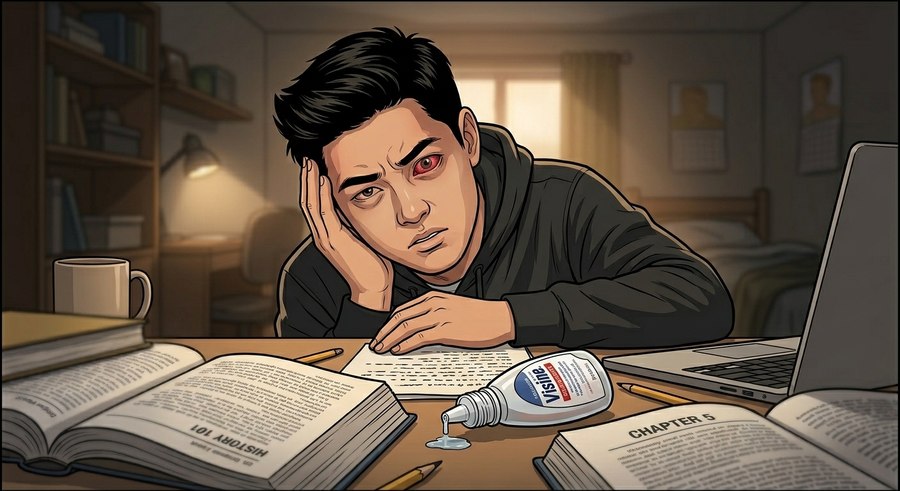
It is the week before midterms. Jordan Chen, a twenty-year-old college sophomore, is three days into a red left eye. The drugstore drops have stopped helping. He tells himself it is pink eye, dims his laptop, and keeps studying. Light has started to hurt, his vision on that side has gone soft, and there is a deep ache behind the eye that drops should have touched by now. By morning, the whole care system will begin to move around him.
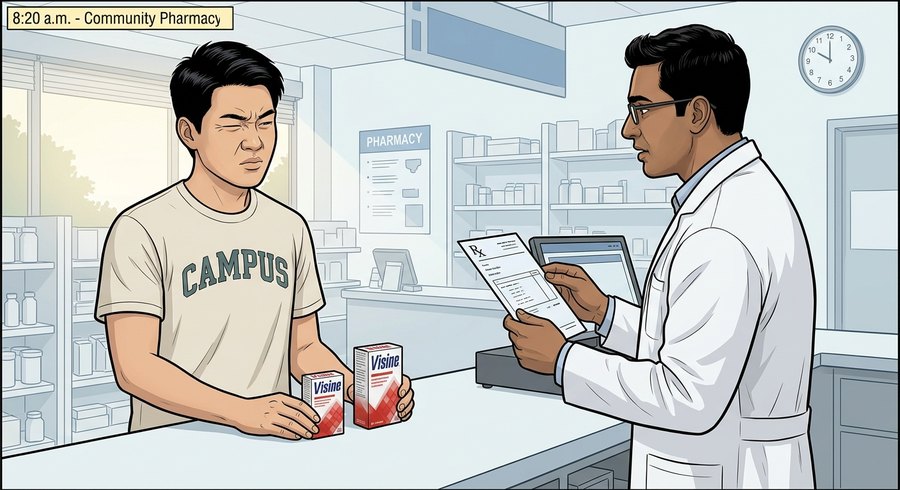
At 8:20 a.m. Jordan stands at the community pharmacy counter with two boxes of redness drops. Raj, the pharmacist, looks up from a prescription, sees the eye, and stops the sale: someone should look at that eye today. A pharmacist can decline the easy transaction, and that refusal is the first act of care in this case.
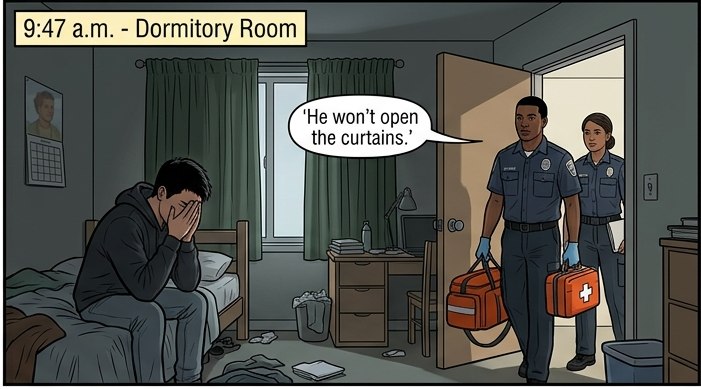
By 9:47 he is back in his dorm with the curtains shut, and the light has become unbearable. His roommate Marcus calls campus emergency services. Devon, the EMT, finds a young man shielding his eyes in a dark room and makes the quiet judgment that shapes the day: this eye needs a clinic now, and he knows which one.
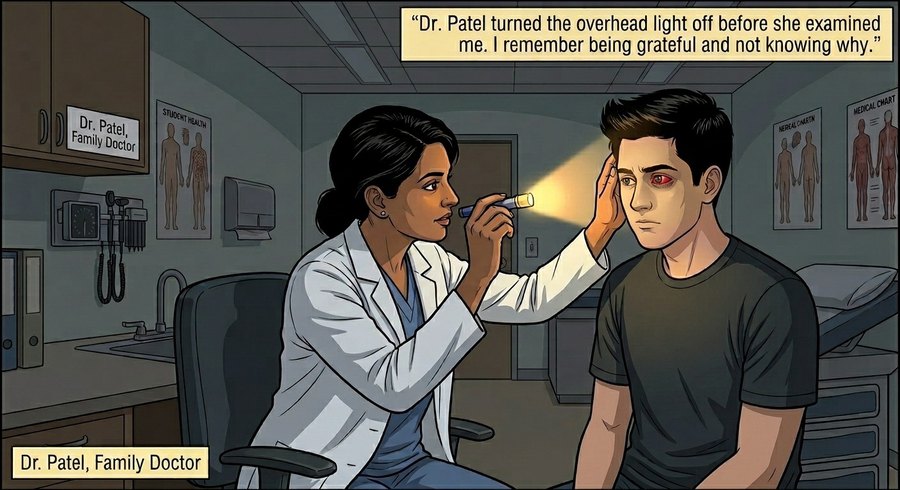
At 11:15 Diego, the medical assistant at the urgent care clinic, rooms him and, without being asked, reaches for the light switch. At 11:32 Dr. Patel, the family doctor, begins with the question that opens the whole case: is the redness more concentrated in one area? She sees the ring of redness around the iris, the small sluggish pupil, the pain with light, and recognizes something beyond pink eye. She calls ophthalmology herself, and Jordan is seen the same afternoon.
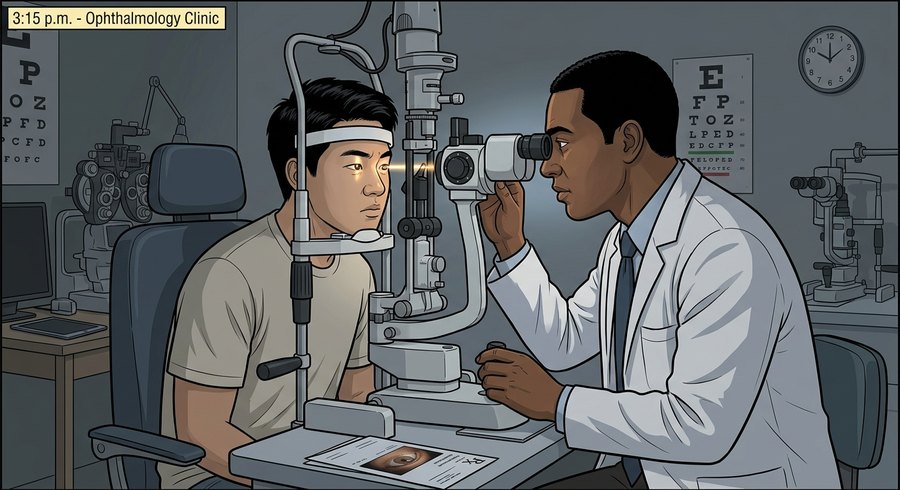
At 3:15 p.m., at the slit lamp, Dr. Osei the ophthalmologist finally sees what no one else could: inflammation inside the eye itself. The diagnosis is anterior uveitis. Steroid drops begin that day to calm the inflammation, and a dilating drop eases the pain. Then Dr. Osei asks the question that carries the case forward: why does a healthy twenty-year-old get uveitis at all?
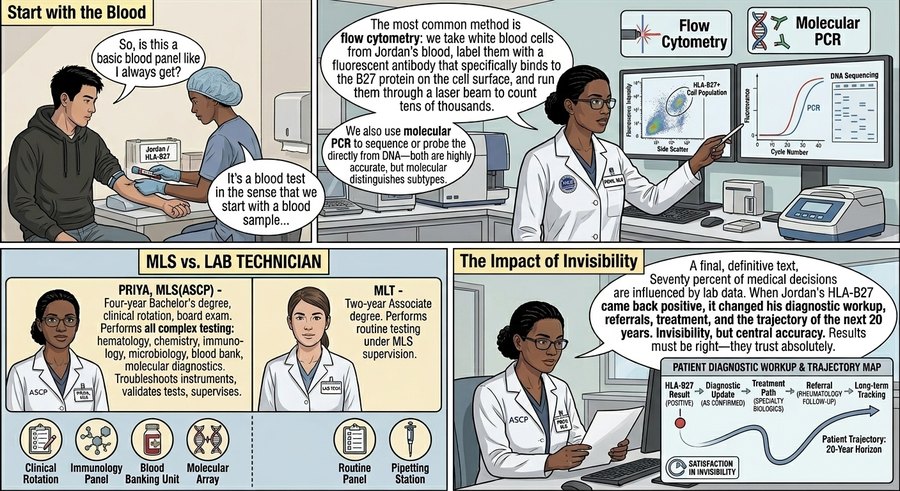
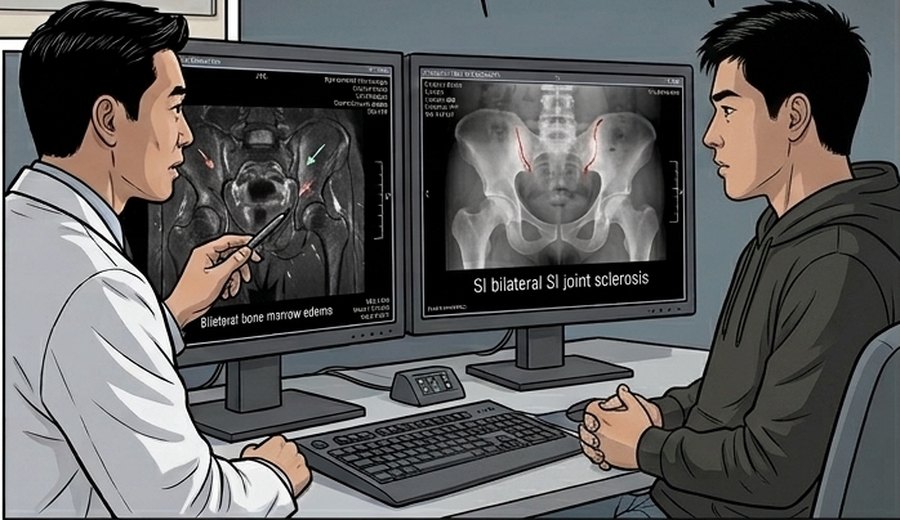
One tube of blood goes to the clinical laboratory, where Priya, the laboratory scientist, runs the assay, and the quality checks behind it, that returns a single decisive result: HLA-B27 positive. In the imaging suite Keisha positions the X-ray by careful degrees, and in the reading room Dr. Park finds what the X-ray could only hint at: on MRI, active inflammation at both sacroiliac joints.
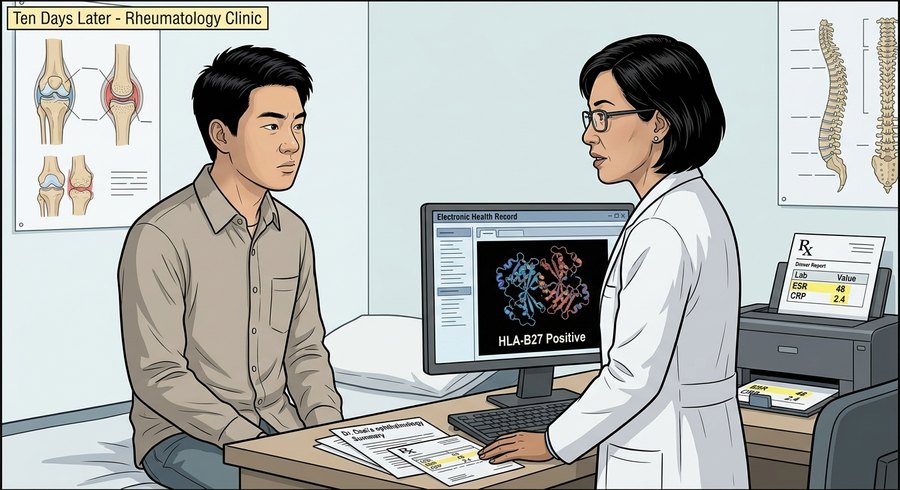
Ten days later, in the rheumatology clinic, Dr. Nakamura assembles the whole picture: the eye, the genetic marker, the imaging, and the low back stiffness Jordan had never thought worth mentioning. The diagnosis is ankylosing spondylitis, an autoimmune disease that had been writing its first chapters in his spine for years. The red eye was the messenger.
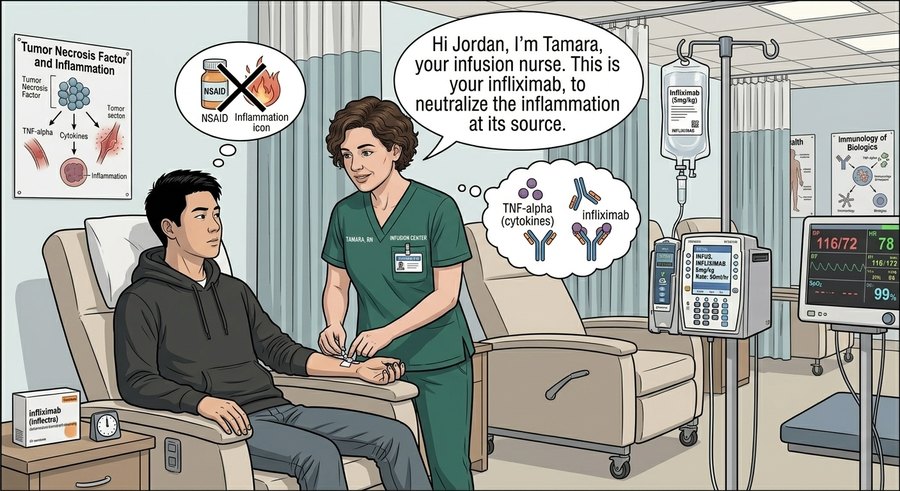
Treatment is a biologic, an engineered antibody that intercepts the inflammation at its source. Getting it takes more people than prescribing it: Maya at the specialty pharmacy works the phones and the appeals queue until the prior authorization clears, and every six to eight weeks Jordan spends two quiet hours in an infusion chair with Tamara, the nurse who notices everything.
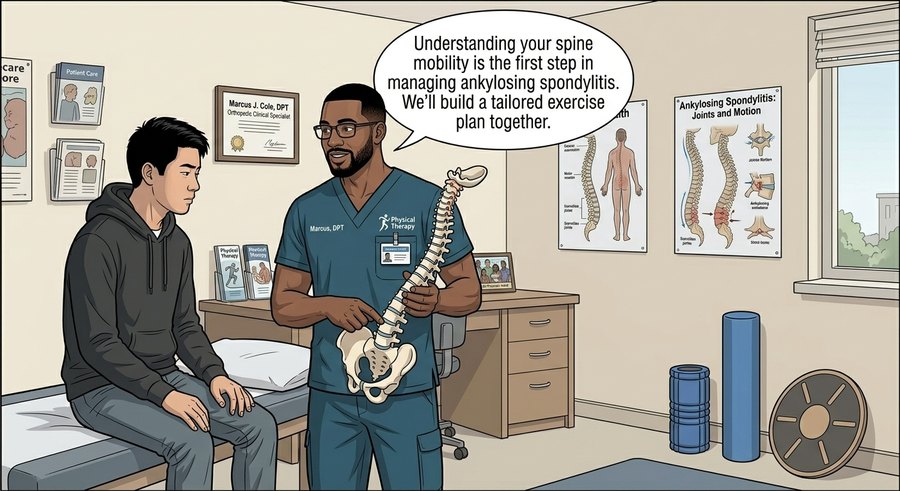
Around the medicine, a wider circle forms. Patrick, the physical therapist, builds the exercise plan that protects his spine, among the best-supported treatments for this disease. Sophia, the dietitian, connects his gut symptoms to the same story. Isabel, the genetic counselor, helps him think through what HLA-B27 means for his sister, Anna. Elena, the social worker, asks the two questions nobody else has: about the costs, and about how to tell his parents.
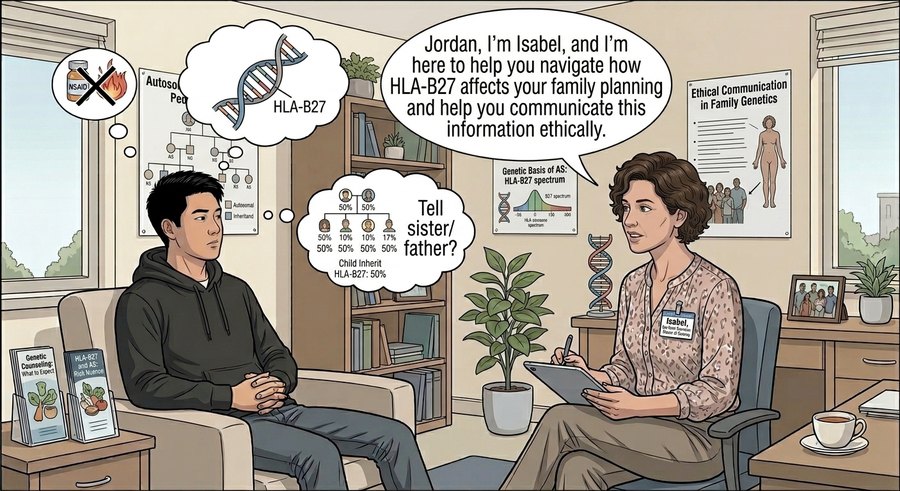
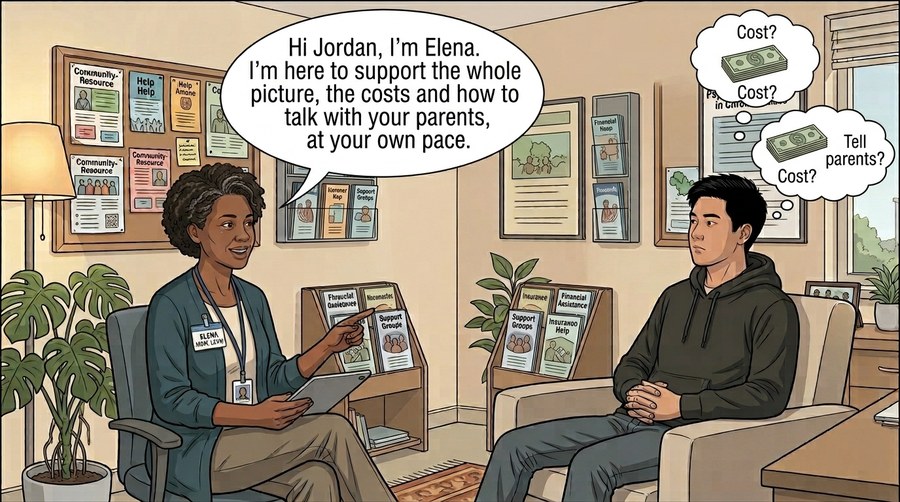
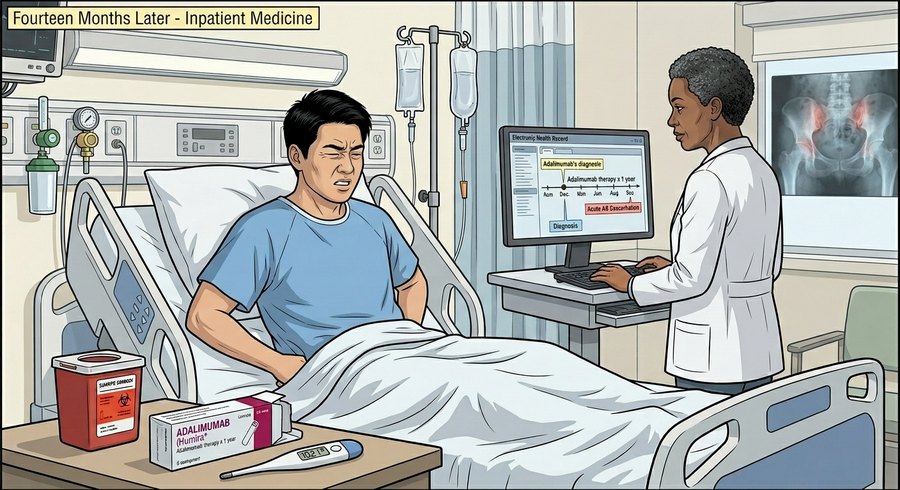
Fourteen months later a severe flare puts Jordan in the hospital for three days, and Dr. Kim, the hospitalist, works the timeline in his chart. Far beyond his sight, the case keeps moving: an informatics specialist tunes the alerts that surface the right data at the right moment, a policy analyst rewrites the prior-authorization rule Jordan just lived through, a campus physician turns three student uveitis cases into better referral pathways, and researchers and executives make decisions that will reach patients Jordan will never meet.
It took thirty people to solve one red eye, and this story only walked past them. Now meet every one of them.